Don't forget that the March Readers Roundtable meeting has been changed from this Saturday, March 7, to next Saturday, March14, when we will discuss The Orchardist by Amanda Coplin. This change of date was made so that we could all attend a Big Read event from 2:00 to 4:00 at the main library on March 7, at which time, Luis Alberto Urrea, the author of Into the Beautiful North, the Big Read selection for 2015, will be speaking in person. To whet your appetite, here is a video of Mr. Urrea's appearance on "Moyers and Company" in 2012.
It should also be noted that several of Luis Alberto Urrea's books have recently been added to the available e-books and audiobooks on the library's portal for downloadable books.
Thursday, March 5, 2015

Wednesday, February 4, 2015
Saturday, February 7, 2015, 2:00 PM, San Leandro Main Library
Book Suggestions for the Rest of 2015
Please send your suggestions to Peggy via email (psunlane@yahoo.com), or be prepared to offer suggestions at the beginning of the February 7 meeting. We will be choosing books for June through December of 2015 either via email (or phone) as soon as possible after the meeting or at the March meeting, depending on how soon the names are needed for publication of the community calendar.
Orphan Train by Christina Baker Kline
Ms. Baker Kline has a more thorough than usual biography at her official site, which I will link to here without trying to rewrite. In the video below, she answers the ten questions she gets asked most often by book clubs.
I was also able to find a brief video where the widow of a man who had been an orphan train rider speaks about her late husband's experience.
Please send your suggestions to Peggy via email (psunlane@yahoo.com), or be prepared to offer suggestions at the beginning of the February 7 meeting. We will be choosing books for June through December of 2015 either via email (or phone) as soon as possible after the meeting or at the March meeting, depending on how soon the names are needed for publication of the community calendar.
Orphan Train by Christina Baker Kline
Ms. Baker Kline has a more thorough than usual biography at her official site, which I will link to here without trying to rewrite. In the video below, she answers the ten questions she gets asked most often by book clubs.
I was also able to find a brief video where the widow of a man who had been an orphan train rider speaks about her late husband's experience.
Wednesday, January 7, 2015
January 10, 2015, 2 PM, San Leandro Main Library

Meet the Author
According to Ms. Adichie's official unofficial website, which is more complete than her official website and sometimes referred to by her official website for more complete information:
Chimamanda Ngozi Adichie was born on 15 September 1977 in Enugu, Nigeria, the fifth of six children to Igbo parents, Grace Ifeoma and James Nwoye Adichie. While the family's ancestral hometown is Abba in Anambra State, Chimamanda grew up in Nsukka, in the house formerly occupied by Nigerian writer Chinua Achebe. Chimamanda's father, who is now retired, worked at the University of Nigeria, located in Nsukka. He was Nigeria's first professor of statistics, and later became Deputy Vice-Chancellor of the University. Her mother was the first female registrar at the same institution.Chimamanda Adichie on Americanah
Chimamanda completed her secondary education at the University's school, receiving several academic prizes. She went on to study medicine and pharmacy at the University of Nigeria for a year and a half. During this period, she edited The Compass, a magazine run by the University's Catholic medical students.
At the age of nineteen, Chimamanda left for the United States. She gained a scholarship to study communication at Drexel University in Philadelphia for two years, and she went on to pursue a degree in communication and political science at Eastern Connecticut State University. While in Connecticut, she stayed with her sister Ijeoma, who runs a medical practice close to the university.
Chimamanda Ngozi AdichieChimamanda graduated summa cum laude from Eastern in 2001, and then completed a master's degree in creative writing at Johns Hopkins University, Baltimore.
It is during her senior year at Eastern that she started working on her first novel, Purple Hibiscus, which was released in October 2003. The book has received wide critical acclaim: it was shortlisted for the Orange Fiction Prize (2004) and was awarded the Commonwealth Writers' Prize for Best First Book (2005).
Her second novel, Half of a Yellow Sun (also the title of one of her short stories), is set before and during the Biafran War. It was published in August 2006 in the United Kingdom and in September 2006 in the United States. Like Purple Hibiscus, it has also been released in Nigeria.
Chimamanda was a Hodder fellow at Princeton University during the 2005-2006 academic year, and earned an MA in African Studies from Yale University in 2008.
Her collection of short stories, The Thing around Your Neck, was published in 2009. Chimamanda says her next major literary project will focus on the Nigerian immigrant experience in the United States. [Note: This refers to Americanah, but the bio apparently hasn't been updated since the book was published.]
Chimamanda is now married and divides her time between Nigeria, where she regularly teaches writing workshops, and the United States. She has recently been awarded a 2011-2012 fellowship by the Radcliffe Institute for Advanced Study, Harvard University.
Chimamanda Adichie on Feminism
This TEDx talk gained some degree of interest lately after Beyonce sampled it for one of her songs.

In Americanah, the Nigerian comfort food of choice seems to be jollof rice, which appears to be a similar to gumbo. Here is a highly rated recipe from the BBC.
Nigerian Popular Music
Ifemelu describes Obinze's mother as looking like Onyeka Onwenu, one of the most popular Nigerian singers of the 1980s and an icon of Ifemelu's childhood. Ms. Onwenu started her career as a secular musician but now focuses on gospel and inspirational music. In this video, she joins King Sunny Ade, another icon of Nigerian popular music, to advise young people to save themselves for marriage.
In Americanah, when they are teenagers, Obinze introduces Ifemelu to the music of Fela Kuti, one of the best know Nigerian musicians outside of Nigeria. This video shows Fela and his music and dance review when he was at the top of his game. The film was shot by Ginger Baker, the former drummer for Cream who was working as Fela's drummer at that time. Fela claimed to have been influenced by American R&B music, and in particular by James Brown.
As an adult, one of Ifemelu's favorite Nigerian singers was Obiora Nwokolobia-Agu, who sings under the stage name of "Obiwon". His song "Obi Mu O" was one of the songs Ifemelu played over and over again to comfort her broken heart after she chased Obinze back to his wife.
Wednesday, December 3, 2014
Saturday, December 6, 2014, 2:00 PM, San Leandro Main Library
The Flamethrowers by Rachel Kushner
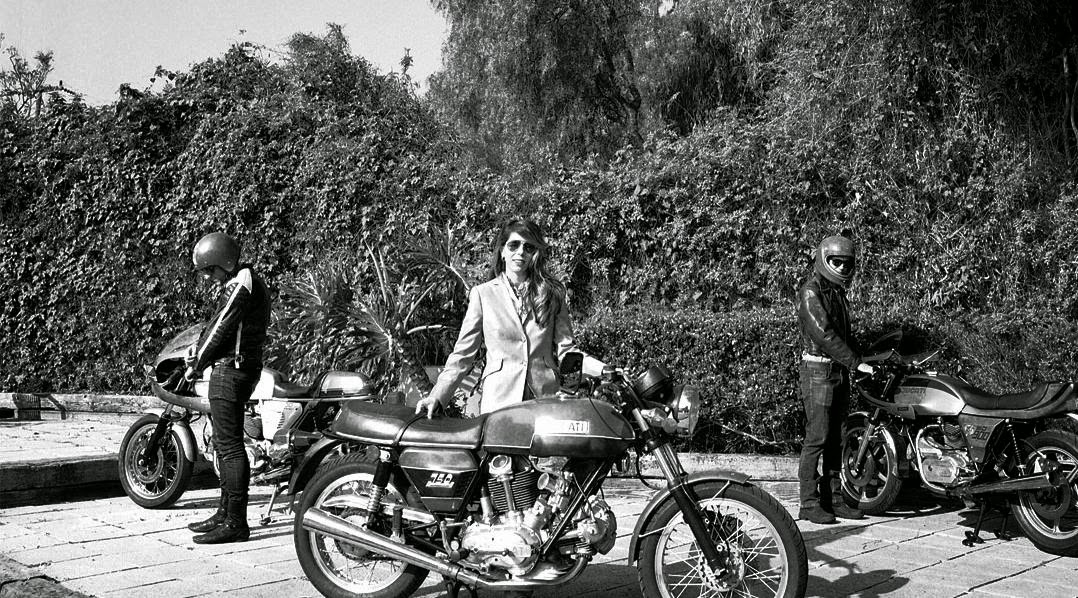
Meet The Author
According to Wikipedia, Rachel Kushner was born in 1968. I don't find anything to confirm that, but I also don't find anything to contradict that, so I'm buying it. According to a profile on her from The New York Times:Ms. Kushner was born in Eugene, Ore., to bohemian parents who were completing doctorates in biology and spent long hours in their labs. For a time the family, which included an older brother, lived in a Merry-Pranksters-like bus. “Our parents had Ph.D.’s, but we were dirty ragamuffin children,” she recalled. “I spent a huge amount of time by myself. I daydreamed and learned how to be alone and not be lonely.”Rachel Kushner is also the author of an earlier critically acclaimed novel, Telex From Cuba, which also was nominated for a National Book Award as was The Flamethrowers, making Ms. Kushner the only writer to have both her first two novels nominated for a National Book Award. On YouTube, you can find a video of her talking to the Los Angeles Review of Books about The Flamethrowers.
Her father, whose Jewish New York family was in the Communist Party, collected beatnik poetry and rode a Vincent Black Shadow motorcycle. Her mother, who Ms. Kushner said once slept in Central Park for a summer, is from a family of St. Louis Unitarians who lived for a time in pre-revolutionary Cuba. Ms. Kushner’s grandfather worked for a nickel-mining company there, the inspiration for her first novel, “Telex From Cuba,” nominated for a National Book Award in 2008.
At 16, Ms. Kushner enrolled at the University of California, Berkeley, where she majored in political economy, raced on the ski team and managed to get good grades while feeling unprepared, she said, academically and socially. To help with the bills, she worked as a waitress in a blues bar where she was frequently the only white person.
...
In 1997 she headed for New York City and Columbia University’s master of fine arts program, where at 29 she was older than most of her classmates. Jonathan Franzen was among her teachers. “I had the sense that she came from a place where nobody had told young women what they could and couldn’t be,” he said. “She was strikingly curious and well informed about the mechanics of the real world, and was neither afraid of intellectual content, nor in any way pretentious about it.”
At the end of the paperback edition of The Flamethrowers that most of us read, there is is an article called "Curated by Rachel Kushner," which contains a commentary on the cultural influences that inspired The Flamethrowers. This article was originally published in the Paris Review. An electronic online version of this article is available, which contains all the images reproduced at the back of the book plus a few that were not in the back of the book, all with commentary on each image. For those who were intrigued by the story of Jack Goldstein, and the record, "The Murder," which leads off the Paris Review article, here is the substance of "The Murder," as played back on YouTube for a little light easy listening.
Times and Places Visited in The Flamethrowers
Italy Before World War I
Sandro Valera's father (referred to only as "Valera" in the chapters in which he appears) along with his friends represent a cultural movement that appeared in Italy shortly before World War I—Futurism. This YouTube short gives an overview of what Futurism was all about.
The Great American Desert
 |
| "Spiral Jetty" by Robert Smithson |
 |
| Craig Breedlove or Flip Farmer? |
New York City in the Mid-to-Late 1970s
I think everyone my age has kind of an idea what the late 1970s scene was like in New York City, but I had a hard time finding any actual material about it on line. I did find some photos by Allan Tannenbaum in this article appropriately entitled "Dirty, Dangerous & Destitute." There is also this 10-minute film, "News from Home," by Chantal Akerman, which Rachel Kushner said was one of the sources of inspiration for The Flamethrowers. Apparently the film is supposed to have a voice-over of Akerman reading letters from her mother at home in Belgium while she sweeps the streets and the skyline with her camera. This YouTube version is minus voice-over, but I have a feeling it was in either Flemish or French anyway.
Italy in the 1970s
 |
| Strike at Fiat Plant in 1969 |
Update: Grave Stele of a Little Girl (ca. 450 to 440 BC)

Wednesday, November 19, 2014
Literary News of the Day

No One-Stop Yacht Shopping for Eatonville
The town council of Eatonville, Florida, the oldest US town founded by black citizens, the home of Zora Neale Hurston, rejected by a 3-2 vote the plan for construction within the town of a shopping center catering exclusively to the ultra rich.Here's a link to the story.
Wednesday, October 29, 2014
Saturday, November 1, 2014, 2:00 PM, San Leandro Main Library
Life After Life by Kate Atkinson
Meet the Author (Virtually)

According to that absolutely unimpeachable font of all wisdom, Wikipedia:
The following YouTube video was taken from an Australian book talk program sponsored by Random House and features Kate Atkinson answering questions about her best-selling book.
Reviews of Life After Life
This section probably should be ignored at least until you've finished the book, maybe even until after the discussion. After I finish a book, I always look up reviews online to see if opinions contradict or validate mine. Most of the reviews I found online were pretty favorable. This is is just a sample via clickable links.
Meet the Author (Virtually)
According to that absolutely unimpeachable font of all wisdom, Wikipedia:
Atkinson was born in York, the daughter of a shopkeeper. She studied English literature at the University of Dundee, gaining her master's degree in 1974. Atkinson subsequently studied for a doctorate in American literature, entitled "The post-modern American short story in its historical context". She has often spoken publicly that she failed at the viva (oral examination) stage. After leaving university, she took on a variety of jobs from home help to legal secretary and teacher. Atkinson has been married twice, whilst a student to the father of her first daughter Eve, and subsequently to the father of her second daughter Helen.Kate Atkinson on Life After Life
Her first novel, Behind the Scenes at the Museum, won the 1995 Whitbread Book of the Year ahead of Salman Rushdie's The Moor's Last Sigh and Roy Jenkins's biography of William Ewart Gladstone. It went on to be a Sunday Times bestseller. Since then, she has published another five novels, one play, and one collection of short stories.
Her work is often celebrated for its wit, wisdom and subtle characterisation, and the surprising twists and plot turns. Some of her work has featured the former detective Jackson Brodie. She has frequently criticised the media's coverage of her work—when she won the Whitbread award, for example, it was the fact that she was a "single mother" who lived outside London that received the most attention.
In 2009, she donated the short story "Lucky We Live Now" to Oxfam's Ox-Tales project, four collections of UK stories written by 38 authors. Atkinson's story was published in the Earth collection.
In March 2010, Atkinson appeared at the York Literature Festival, giving a world-premier reading from an early chapter from her novel Started Early, Took My Dog (2010), which is set mainly in the English city of Leeds.
Atkinson was appointed a Member of the Order of the British Empire (MBE) in the 2011 Birthday Honours for services to literature.
The following YouTube video was taken from an Australian book talk program sponsored by Random House and features Kate Atkinson answering questions about her best-selling book.
Reviews of Life After Life
This section probably should be ignored at least until you've finished the book, maybe even until after the discussion. After I finish a book, I always look up reviews online to see if opinions contradict or validate mine. Most of the reviews I found online were pretty favorable. This is is just a sample via clickable links.
The GuardianOn the contrary side, though, I did find this guy who apparently posts book reviews online via semi-automated comic strips uploaded to YouTube. Apparently this guy didn't like the book and was not too shy to talk about it—for 20 minutes. I thought it was a hoot, but as I said before, you might want to wait until after the group discussion before watching.
The New York Times
NPR
Salon
Wednesday, October 1, 2014
Saturday, October 4, 2014, 2:00 PM, San Leandro Main Library
Gone Girl by Gillian Flynn
Meet the Author
 Gillian Flynn, who pronounces her first name with a hard g as in "gills", was born in Kansas City, Missouri, in 1971. Her parents were both community college professors; her mother taught reading, and her father taught film. She grew up watching a lot of movies. She attended first the University of Kansas and then Northwestern University, majoring in journalism and hoping to be a crime reporter, but soon came to the conclusion that she was not cut out for that kind of work. She eventually found work with Entertainment Weekly magazine and stayed for ten years, first as a reporter and then as their resident television critic for the last four years she was there. Before her mega best-seller Gone Girl, Flynn wrote two other crime novels, Sharp Objects and Dark Places, both of which and/or available for electronic download from the San Leandro Library.
I found the following short YouTube clip in which Gillian Flynn answers questions about Gone Girl. The heading says "spoiler alert," but if you've gotten more than halfway through the book, this clip won't spoil anything for you.
Coming Soon to a Theater Near You
The movie version of Gone Girl is coming out this Friday, the day before our meeting, and stars Ben Affleck as Nick and Rosamund Pike as Amy.
I was curious to see who was going to play the "ugly" Detective Rhonda Boney, and of course Hollywood being as it is, Boney is played by the lovely Kim Dickens.

True Crime
Do people really carry out complex, multi-year revenge plots? The answer is yes. As I was reading the book, I kept being reminded of an elaborate real-life revenge plot that has haunted me ever since I heard about it back in 1999, which involved a man "punishing" his wife for what he saw as an act of betrayal that occurred very early in their relationship. If you are deeply affected by hearing of the depths of human evil, do not follow this link. While I was tracking down that story, I came across, this story about another complicated revenge plot, this one involving a frame-up by a police informer of a woman who had dumped him. This would also make a good story but was hell for the woman who lived it.
Talking to the Police
In Gone Girl, Nick Dunne's interactions with the investigating officers are largely informed by ideas gleaned from movies and television, most of which were at least somewhat inaccurate. One of the most harmful delusions that Nick was laboring under was that he shouldn't have an attorney present during his police interviews because "only guilty people" needed to "lawyer up". This gives me the opportunity to link to this lecture at the very conservative Regent University (founded by Pat Robertson), conducted by a former defense attorney, now a law professor, jointly with a former police detective, who tell law students why a lawyer who lets his clients talk to the police is a bad lawyer. The lecture is almost an hour long, and the professor talks really fast, but if you don't have the time or patience to watch it now, save the link and watch it sometime. It could literally save your life.
Meet the Author
I found the following short YouTube clip in which Gillian Flynn answers questions about Gone Girl. The heading says "spoiler alert," but if you've gotten more than halfway through the book, this clip won't spoil anything for you.
Coming Soon to a Theater Near You
The movie version of Gone Girl is coming out this Friday, the day before our meeting, and stars Ben Affleck as Nick and Rosamund Pike as Amy.
I was curious to see who was going to play the "ugly" Detective Rhonda Boney, and of course Hollywood being as it is, Boney is played by the lovely Kim Dickens.
True Crime
Do people really carry out complex, multi-year revenge plots? The answer is yes. As I was reading the book, I kept being reminded of an elaborate real-life revenge plot that has haunted me ever since I heard about it back in 1999, which involved a man "punishing" his wife for what he saw as an act of betrayal that occurred very early in their relationship. If you are deeply affected by hearing of the depths of human evil, do not follow this link. While I was tracking down that story, I came across, this story about another complicated revenge plot, this one involving a frame-up by a police informer of a woman who had dumped him. This would also make a good story but was hell for the woman who lived it.
Talking to the Police
In Gone Girl, Nick Dunne's interactions with the investigating officers are largely informed by ideas gleaned from movies and television, most of which were at least somewhat inaccurate. One of the most harmful delusions that Nick was laboring under was that he shouldn't have an attorney present during his police interviews because "only guilty people" needed to "lawyer up". This gives me the opportunity to link to this lecture at the very conservative Regent University (founded by Pat Robertson), conducted by a former defense attorney, now a law professor, jointly with a former police detective, who tell law students why a lawyer who lets his clients talk to the police is a bad lawyer. The lecture is almost an hour long, and the professor talks really fast, but if you don't have the time or patience to watch it now, save the link and watch it sometime. It could literally save your life.
Subscribe to:
Posts (Atom)