Thursday, September 10, 2015

Book Discussion Meeting, Saturday, September 12, 2015, 2 PM, San Leandro Main Library

Provence, 1970 by Luke Barr

You are cordially invited to join us for a long-ago series of dinner parties in the Provence region of France with some of the culinary giants of the 20th century and several of their friends.

Meet the Author

Luke Barr
The only biographical information available on Luke Barr is that on the back cover of the book: "Luke Barr is an editor at Travel & Leisure. A grandnephew of M.F.K. Fisher, he grew up in the San Francisco Bay Area and in Switzerland. He lives in Brooklyin with his wife, architect Yumi Moriwaki, and their two daughters."

Meet the Chefs and Gastronomes

M.F.K. Fisher
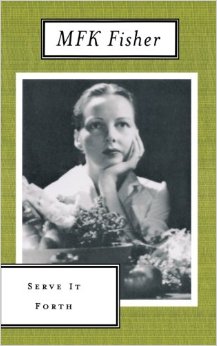
Mary Frances Kennedy Fisher, Luke Barr's great-aunt, was born in 1908 and died in 1992. She is best known for her writings about food as one of the "arts of life." Her first book, Serve it Forth, was published in 1937, and it's cover bore a photograph of her taken by Man Ray.


Last House
This is the Glen Ellen house that M.F.K Fisher lived in from 1970 till her death in 1992.


Julia Child
Julia Child is best known in the US as television's "French Chef." The Readers Roundtable read and discussed her pothumously published memoir, My Life in France in May of 2009. Julia Child was born in 1912 and died in 2004. She wrote almost 20 books and was associated with 13 television series. During World War II, she served in the OSS, the precursor to the CIA, where she met and married her husband Paul.

La Pitchoune
This is the house where Julia and Paul Child stayed when they were in France, now the site of a cooking school. This picture was "borrowed" from the album of an American couple who had stayed there recently.


Simone "Simca" Beck

Simone Beck was Julia Child's collaborator on her two Mastering the Art of French Cooking books, also the owner of the property on which La Pitchoune sat. She was born in 1904 and died in 1991.


James Beard
A giant of American cooking and the first to champion it as a worthy cuisine, James Beard was a friend of M.F.K. Fisher and Julia Child. He was born in 1903 and died in 1985. He hosted the first ever cooking show on US television.


Richard Olney
Richard Olney was born in Iowa in 1927 and died in France in 1999. He was trained as a painter but taught himself French cooking and is better known as a writer about everyday French cuisine. He was the enfant terrible in residence at Provence in 1970


Friends and Family

Norah Barr
Norah Barr was the sister of M.F.K. Fisher and grandmother of Luke Barr. She had joined M.F.K. on the 1970 trip to France that is central to the book. This picture was taken in 2010 by Yumi Moriwaki, Luke Barr's wife. She was born in 1917 and died in 2014 in Santa Rosa.


Eda Lord
Novelist and old boarding-school friend of M.F.K. Fisher, she was also a friend of Richard Olney and invited him to visit her and meet M.F.K. Fisher, Julia Child, and James Beard. No identifiable photograph of her exists on the internet, but copies of her book, Extenuating Circumstances, are available online ranging from about $12 (used) to $203 (new). You can find an actual review on the Kirkus website.


Sybille Bedford
Writer Sybille Bedford was born in 1911 in Germany and died in 2006 in London. Most of her writing was autobiographical or semi-autobiographical. She was a long-time partner of Eda Lord and known for her acerbic wit and strong opinions. If you are interested, her bio/obituary can be found in the New York Review of Books.

Tuesday, July 28, 2015

Book Discussion on Saturday, August 1, 2015, 2:00 P.M., San Leandro Main Library

Ghana Must Go by Taiye Selasi

Novelists have become very coy about sharing their biographical information on their official websites, maybe because they want the story to be the one they wrote and not the one about them. So once again I have been forced to turn to Wikipedia as a last resort. The usual caveats apply.

Taiye Selasi was born November 2, 1979, in London, England, the first of twin sisters (Taiye and Kehinde) and grew up in Brookline, Massachusetts. She received a BA in American Studies from Yale and a Master's in International Relations from Nuffield College, Oxford. Ms. Selasi's mother is a prominent pediatrician in Ghana and the Baltimore area, her father a surgeon practicing in Saudi Arabia, and her twin sister a rehabilitation medicine specialist practicing in the Boston area. Selasi didn't meet her father until she was 12 years old. In the video below, she talks about Ghana Must Go and challenging preconceptions about Africa and Africans.


The Makola Market in the center of Accra, Ghana


Skyline of Lagos, Nigeria


Why "Ghana Must Go"?


At the end of the book, Fola is given a memento of her late husband
packed in a "Ghana Must Go" bag. I had to look up what that meant, and I found it in the blog of a young woman named Anne Chia.

As Ms. Selasi mentioned briefly in her book, in 1983, Nigeria's President Shagari announced that within a few weeks all immigrants without the proper documentation would be ordered to leave Nigeria. This order affected about a million Ghanaian residents and about another million from other West African countries. The immigrants facing expulsion were forced to pack up whatever they could into whatever luggage they could find, and the most ubiquitous bag used for this purpose was a large, deep, inexpensive checkered tote bag, which Anne Chia describes in her blog post thus:
It is quite popular worldwide and is used for laundry and to store beddings or even as holiday excess luggage in many countries in the world. But specifically, in Germany it is “Tuekenkoffer”, which means the Turkish suitcase. In the United States of America, it is called the “Chinatown tote”. In Guyana, it is the “Guyanese Samsonite”. In Ghana and Nigeria, where the bags are celebrities and the most recognisable signature of “movement” it is known simply as the “Ghana must go” bag.

The typical checkered pattern has since also taken on the name of "Ghana Must Go" and has been incorporated into African-influenced fashion design.


The other day, I saw a video clip of Mika Brzezinski and noticed that she was wearing what looked kind of like a "Ghana Must Go" shirt. I wonder if she knew it.

Thursday, July 9, 2015

Book Discussion, Saturday, July 11, 2015, 2:00 PM, San Leandro Main Library

The Shelf: Adventures in Extreme Reading by Phyllis Rose

Phyllis Rose, a writer of literary analysis and criticism, decided to try an experiment. As she describes it in the first paragraph of The Shelf:

"...Believing that literary critics wrongly favor the famous and canonical—that is, writers chosen for us by others—I wanted to sample, more democratically, the actual ground of literature. So I chose a fiction shelf in the New York Society Library somewhat at random—it happens to be the LEQ-LES shelf—and set out to read my way through it, writing about the experience as I went. I had no reason to believe that the books would be worth the time I would spend on them. They could be dull, even lethally so. I was certain, however, that no one in the history of the world had read exactly this series of novels. That made the project exciting to me."

Among the books from the LEQ-LES shelf that Ms. Rose read and commented on were:

One for the Devil by Etienne Leroux
A Hero of Our Time by Mihail Lermontov
The Phantom of the Opera by Gaston Leroux
Call me Ishtar by Rhoda Lerman
Yes, My Darling Daughter by Margaret Leroy
Just Like Beauty by Lisa Lerner
Count Luna by Alexander Lernet-Holenia
Gil Blas by Alain-Rene Le Sage
The 13th Juror by John Lescroart
Spies of the Kaiser by William Le Queux

In all, Ms. Rose read about 30 novels. Come join us and let us know what you thought of her experiment.

Wednesday, June 3, 2015

Book Discussion Meeting, Saturday, June 6, 2015, 2:00 PM, San Leandro Main Library

One Summer: America 1927 by Bill Bryson

William McGuire "Bill" Bryson was born in Des Moines, Iowa, in 1951. He dropped out of college in 1972 to go backpacking in Europe, went back the following year, and in England met the woman who was to become his wife. Except for returning a couple of times to the US, first to finish college and later for work projects, Bryson has spent most of his adult life in the UK. He worked first in journalism and then published his first book in 1985, shortly after which, he left journalism. He is best known for his travel writing like In a Sunburned Country, which the Readers Roundtable discussed back in 2006. He has also written several books like this month's selection, One Summer: America 1927, about history and several books of science, biography, and memoir. For one of his science books, A Really Short History of Nearly Everything, Bryson was awarded the 2005 President's Award from the Royal Society of Chemistry for advancing the cause of the chemical sciences. For a full list of all his books and awards, visit his Wiki page. The usual Wikipedia caveats apply, but if even half of it is true, he has still lived quite a life.

In the following YouTube video, Bill Bryson shares why he thinks the five months of 1927 that are the subject of One Summer are such a key turning point for the US.


One of Bryson's travel books that was a huge best-seller, and one which I have read was A Walk in the Woods, and it appears that the movie version of that book is just able to be released, starring Robert Redford and Nick Nolte. Check out the trailer.

Wednesday, April 29, 2015

Book Discussion Meeting, Saturday May 2, 2015, 2:00 PM, San Leandro Main Library

Oleander Girl by Chitra Banerjee Divakaruni

Dakshineswar Kali Temple near Kolkata

From the unimpeachable source of all wisdom, Wikipedia:

 Chitralekha Banerjee Divakaruni was born in Kolkata (Calcutta), India. She has two brothers. She received her B.A. from the University of Calcutta in 1976. That same year, she went to the United States to attend Wright State University where she received a master's degree. She received a PhD in English from the University of California, Berkeley in 1985 (Christopher Marlowe was the subject of her doctoral dissertation).

Divakaruni put herself through graduate school by taking on odd jobs, working as a babysitter, a store clerk, a bread slicer in a bakery, a laboratory assistant at Wright State University, and a dining hall attendant at International House, Berkeley. She was a graduate teaching assistant at U.C.Berkeley She taught at Foothill College in Los Altos, California and Diablo Valley College. She now lives and teaches in Texas, where she is the at the nationally ranked University of Houston Creative Writing Program.

Divakaruni is a co-founder and former president of Maitri, a helpline founded in 1991 for South Asian women dealing with domestic abuse. Divakaruni serves on its advisory board and on the advisory board of a similar organisation in Houston, Daya. She also serves on the emeritus board pf Pratham Houston, a non-profit organisation working to bring literacy to disadvantaged Indian children. She volunteers for Indo American Charity Organization, a non-profit which raises money to assist various charities in the Houston area.

Meet the author at the book launch of Oleander Girl at the Asia Society Texas Center


Wednesday, April 8, 2015

Book Discussion on Saturday, April 11, 2015, 2:00 PM, San Leandro Main Library

2015 "Big Read" Event, Into the Beautiful North by Luis Alberto Urrea

Meet the Author

Luis Urrea was born in 1955 in Tijuana, Mexico, to a Mexican father and American mother. His family eventually moved across the border to San Diego, and he spent most of his childhood there. He graduated from UC, San Diego and did graduate work at the University of Colorado at Boulder. He was a relief worker at the dumps in Tijuana, the memory of which colors much of his writing. He moved to Boston to teach expository writing and fiction at Harvard, and it was at about this point that his career as a writer began to take off. He now lives in Napierville, IL, and is a professor of creative writing at the University of Illinois, Chicago. Many of us were fortunate to be able to hear Mr. Urrea speak at the San Leandro Library last month. In addition to this year's "Big Read" selection, Into the Beautiful North, Mr. Urrea has written three other novels, several books of memoirs and short stories, and several non-fiction works including The Devil's Highway from 2004, which was shortlisted for the Pulitzer Prize. Last month, I posted an interview of Mr. Urrea by Bill Moyers, in which they talked about The Devil's Highway. This interview can be found by scrolling down on the home page or by clicking on this link.

In the YouTube clip below, Luis Urrea talks with a reporter from San Diego's public television station about Into the Beautiful North


The Magnificent Seven

It is the movie, "The Magnificent Seven," that inspires Nayeli and her friends to take the perilous journey into the north.


Bonus trivia question: Who is the only one of the seven still alive?

ROAD TRIP!

El Rosario, Sinaloa, AKA "Tres Camarones"

Entry to the temple of Nuestra Senora del Rosario, built in the mid 1700s

The lagoon in El Rosario
Tijuana, Baja California


Tijuana dump

Mexico-US border fence at beach in Tijuana

Los Yunaites

La Jolla Beach, San Diego
Viva Las Vegas!


Lake Estes, Colorado
Prairie Dog Town, Oakley, KS

"Seemore" and "Readmore" guarding the door at the library in Kankakee, IL

Wednesday, March 11, 2015

Book Discussion on Saturday, March 14, 2015, 2:00 PM, San Leandro Main Library

The Orchardist by Amanda Coplin

Meet the Author

Because she is fairly young and has published only one book, Amanda Coplin's official biography, the one at her official website and at her publisher's website, is only one paragraph long:
Amanda Coplin was born in Wenatchee, Washington. She received her BA from the University of Oregon and MFA from the University of Minnesota. A recipient of residencies from the Fine Arts Work Center in Provincetown, Massachusetts, and the Omi International Arts Center at Ledig House in Ghent, New York, she lives in Portland, Oregon. The Orchardist is her first book.

She opens up a little bit more in an interview with The Oregonian about the important influences in her life and on the story she tells in The Orchardist, especially about having started with her grandfather as a model for the character William Talmadge. She also speaks about her grandfather and other topics related to her book in this on the weekly television show "Well Read." (Her interview is in the first 19 minutes of the video, while in the last part the hosts discuss similar or related books by other authors and have some good reading recommendations.)


The Landscape of the Wenatchee Valley

The Orchardist is set in the Wenatchee Valley of Eastern Washington, "the apple capital of the world," where the Wenatchee River flows into the Columbia. This is where Amanda Coplin grew up, and she mentions in her TV interview about how her characters are influenced by the landscape. I was able to find a few evocative photos online.
The Wenatchee Valley
Lake Wenatchee
Peshastin Pinnacles near Wenatchee with Orchard in Foreground
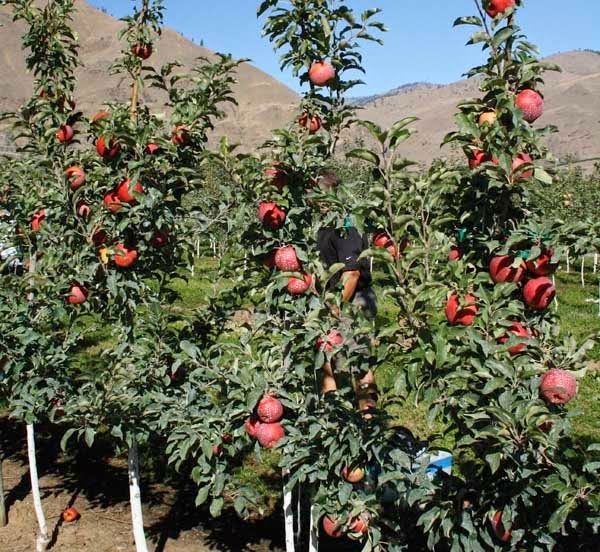
Apples Looking Ready for Harvest


Wild Horses

Eastern Washington is wild horse country. The Appaloosa  horse emerged as a distinctive breed  in the border region between Washington and Idaho and was highly priced by the the Nez-Perce people, "the finest light cavalry  in the world" in their time.

Fine Appaloosa Horse

The open range gradually became too small to support wild horses in large numbers, and many of them were rounded up.

"Last Roundup" in 1906


There is now a scenic area in central Washington overlooking the Columbia River, which is called Wild Horses Monument. On a hill in that monument is a series of iron statues titled "Grandfather Cuts Loose the Ponies" by sculptor David Govedare, commissioned on the occasion of Washington State's centennial in 1989.