Wednesday, January 6, 2016

Book Discussion Meeting, Saturday, January 9, 2016, San Leandro Main Library, 2:00 PM

Just Mercy by Bryan Stevenson


Born in 1959, Bryan Stevenson grew up in Milton, Delaware, and attended Eastern University (Pennsylvania) and Harvard Law School. In Just Mercy, he tells about his working life, spent mostly in the American South, helping indigent people, especially African American and other minority people already incarcerated or facing trial, to get the kind of legal representation that they are so often denied. He went on to found the Equal Justice Initiative, In the video below, he gives a TED talk about his work This talk raised more than $1 million to fund a campaign to stop the practice of trying and sentencing children as adults.


On Bryan Stevenson's website, you can find a page with pictures and stories of some of the people he mentioned in his book, including Walter McMillan, the man whose unjust trial and imprisonment were at the heart of the story of Just Mercy.
Walter McMillan on the day of his release

Criminal Justice Reform as Hot Topic in Popular Culture

The latest Netflix streaming video binge-watch for the past few weeks has been "Making a Murder," about a man, Steven Avery, who was wrongfully convicted of rape, freed, and right after he filed a wrongful imprisonment lawsuit, was rearrested and charged with the murder of a woman who disappeared while on her way to see him. The Netflix series raises questions about Avery's second conviction. Below is the trailer.


Some of the best consciousness-raising commentary in the past few years has come from British-born comedian, John Oliver, formerly of "The Daily Show" now with his own show, "Last Week Tonight" on HBO. Oliver has used his show as a platform to attack many of the inequities of the American justice system. Below are four segments from just the last six months, attacking serious issues using humor. (Warning, because Oliver is a Brit and his show in on HBO, the outraged analogies can get more than colorful from time to time, especially considering the emotional topics under consideration).

Bail


Public Defenders


Mandatory Minimums


Prisoner Reentry


Here are a couple of older but relevant videos.

Municipal Violations


Elected Judges


Wednesday, December 2, 2015

Book Discussion Group, Saturday, December 5, 2015, 2:00 PM, San Leandro Main Library


Love and Treasure by Ayelet Waldman 

In 1945 American soldiers discover a train near Salzburg filled with unspeakable riches.

 Meet the Author


Again, from the unimpeachable found of all wisdom, Wikipedia, cut and pasted for your convenience:
Born December 11, 1964, is an Israeli American novelist and essayist. She has written seven mystery novels in the series The Mommy-Track Mysteries and three other novels. She has also written autobiographical essays about motherhood. Waldman spent three years working as a federal public defender and her fiction draws on her experience as a lawyer.

 Waldman's grandparents on both sides immigrated to North America from Ukraine early in the 20th century. Her father, Leonard, was from Montreal, Canada, but was living in Israel when he met her mother, Ricki. After they married, they moved to Jerusalem, where Waldman was born. After the Six-Day War in 1967, her family moved to Montreal, then Rhode Island, finally settling in Ridgewood, New Jersey when Waldman was in sixth grade. Waldman attended Wesleyan University, where she studied psychology and government and studied in Israel in her junior year, graduating in 1986. She returned to Israel after college, to live on a kibbutz, but found it unsatisfying. Waldman then entered Harvard Law School. She graduated with a J.D. in 1991.

After graduating from law school, Waldman clerked for a federal judge, worked in a large corporate law firm in New York for a year, and then moved to California with Chabon, where she became a criminal defense lawyer. Waldman was a federal public defender for three years in the Central District of California. Chabon mentioned on their first date that it was his intention to care for his children so his wife could pursue her career, which he did after the birth of their first and second children. After the birth of her first child, she tried juggling legal work with mothering, then left her job to be with her husband and child. This was short-lived.

Waldman was an adjunct professor at the Boalt Hall School of Law at the University of California, Berkeley from 1997 to 2003. She also worked as a consultant to the Drug Policy Alliance, a resource center advocating a drug policy based on harm reduction. Waldman has said she will not be returning to the legal profession. In her fiction Waldman has drawn extensively on her legal experience.

Waldman has been married to author Michael Chabon since 1993.The couple work from the same office in the backyard of their home. They edit each other's work, and offer each other advice on writing, sometimes going on "plot walks" to discuss issues. Waldman and Chabon live in a 1907 Craftsman house in the Elmwood district of Berkeley, California, with their four children. (Note that the Readers Roundtable read and discussed Michael Chabon's book, Telegraph Avenue, in June of 2014.)

Waldman was raised in a Jewish family, attended Hebrew school and Jewish summer camps, and lived on a kibbutz in Israel for a year while in the tenth grade. She has said that her parents were atheists, but very Jewish, and that her "whole life was immersed in Judaism, but in a very specific kind of Labor–Zionist Judaism." Despite this, she did not celebrate becoming a Bat Mitzvah.Many characters in her fiction are Jewish, and her novel, Love and Treasure, is about the Holocaust. Waldman has written several times about her 2002 diagnosis of bipolar disorder, an illness that runs in her family, and has spoken publicly about parenting while having a mental illness.


The Hungarian Gold Train


From the official site detailing the Hungarian Gold Train settlement: "The Hungarian Gold Train was a train of approximately 24 freight cars that contained personal property which was taken, seized, confiscated or stolen by the Hungarian government from Hungarian Jews. The personal property in issue was taken into custody by the United States Army on or about May 11, 1945 near Werfen, Austria and later moved to Salzburg, Austria."

Salzburg, Austria

Wednesday, November 4, 2015

Book Discussion, Saturday November 7, 2015, 2:00 PM, San Leandro Main Library

The Dressmaker of Khair Khana by Gayle Tzemach Lemon


Meet the Author

Gayle Tzemach Lemmon
Biography from Amazon.com: Gayle Tzemach Lemmon is a Senior Fellow at the Council on Foreign Relations and the author of The New York Times best sellers Ashley's War: The Untold Story of a Team of Women Soldiers on the Special Ops Battlefield and The Dressmaker of Khair Khana. She is also a contributor to Atlantic Media's Defense One site. In 2004 she left ABC News to earn her MBA at Harvard, where she began writing about women entrepreneurs in conflict and postconflict zones, including Afghanistan and Rwanda. Following MBA study she served as a vice president at the investment firm PIMCO. She has written for Newsweek, the Financial Times, and the International Herald Tribune, as well as for the World Bank and Harvard Business School. She gave a TED Talk on Ashley's War and its all women's Special Ops team this past May, following on her 2011 TED Talk on the importance of investing in global entrepreneurs. A Fulbright scholar and Robert Bosch fellow, Gayle speaks Spanish, German, French and is conversant in Farsi.

Below is a TED Talk by Gayle Tzemach Lemon about Kamila Sidiqi and other female entrepreneurs in conflict areas and about the challenges they face and have overcome.


The Afghanistan Puzzle

Just as an example of why the situation in Afghanistan is so complicated, this is a map showing the territories of the different ethnolinguistic groups that form the nation of Afghanistan. The the dark brown area is the territory of the Pashtun people, the people traditionally known as Afghans throughout Central and South Asia. The Pashtun are also one of the major ethnic groups of Pakistan. This is the ethnic group that the Taliban came from. The bright green area is the traditional territory of the Tajik people, the ethnic group that the Sidiqi family belong to. The Tajik language is from the Persian family of languages. The Tajik people are also the majority ethnic group of Tajikistan, a Central Asian republic that was formerly part of the Russian Empire and the Soviet Union.

Note: This map was created in 1985, and no doubt the boundaries of the different ethnic territories have shifted, maybe even significantly, since then.

UPDATE: Afghan Dresses

Here are links to a few sites selling Afghan dresses, including wedding dresses, so that you can get an idea what goes into creating one.

Saneens
Zarinas
Afghan Fashion 

Tuesday, September 29, 2015

Book Discussion, Saturday, October 3, 2015, 2:00 PM, San Leandro Main Library

Belle Cora by Phillip Margulies

From a review by Clea Simon in The San Francisco Chronicle:

"Confession may be good for the soul, but it can be dull to read. Ever since the first antiheroes (and antiheroines) shared their stories under the guise of cautionary tales, the best authors have known this to be true—and have given their repentant retellings more emphasis than the contrition that follows. Longtime nonfiction author Phillip Margulies follows this format with "Belle Cora," a rollicking first novel that tracks an American Moll Flanders on her roller-coaster ride from respectability into quite profitable sin and back again. As her fortunes rise and fall, her life, which spans 1828 to 1919, also serves as an enjoyable allegory for the settling of the American West, with plenty of sex and violence along the way."

Meet the Author

Phillip Margulies
The only biographical information available anywhere on the internet reads:  Phillip Margulies is the author of several books on science, politics, and history for young adults. He has won two New York Foundation for the Arts fellowships. He lives in New York City with his wife and two children. However, I was also able to find an article where he was interviewed about his favorite place to write. [Spoiler: It's Starbucks.]

The Story Behind the Story

There really was a Belle Cora. Her name was Arabella Ryan. She is most famous as having been the paramour and last-minute wife of Charles Cora, a gambler who was hanged by the Vigilance Committee in San Francisco in 1856. This article tells the story.

Execution of James P. Casey and Charles Cora by the Vigilance Committee, May 22, 1856.

Thursday, September 10, 2015

Book Discussion Meeting, Saturday, September 12, 2015, 2 PM, San Leandro Main Library

Provence, 1970 by Luke Barr

You are cordially invited to join us for a long-ago series of dinner parties in the Provence region of France with some of the culinary giants of the 20th century and several of their friends.

Meet the Author

Luke Barr
The only biographical information available on Luke Barr is that on the back cover of the book: "Luke Barr is an editor at Travel & Leisure. A grandnephew of M.F.K. Fisher, he grew up in the San Francisco Bay Area and in Switzerland. He lives in Brooklyin with his wife, architect Yumi Moriwaki, and their two daughters."

Meet the Chefs and Gastronomes

M.F.K. Fisher
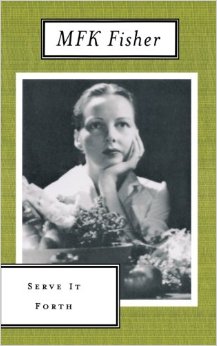
Mary Frances Kennedy Fisher, Luke Barr's great-aunt, was born in 1908 and died in 1992. She is best known for her writings about food as one of the "arts of life." Her first book, Serve it Forth, was published in 1937, and it's cover bore a photograph of her taken by Man Ray.


Last House
This is the Glen Ellen house that M.F.K Fisher lived in from 1970 till her death in 1992.


Julia Child
Julia Child is best known in the US as television's "French Chef." The Readers Roundtable read and discussed her pothumously published memoir, My Life in France in May of 2009. Julia Child was born in 1912 and died in 2004. She wrote almost 20 books and was associated with 13 television series. During World War II, she served in the OSS, the precursor to the CIA, where she met and married her husband Paul.

La Pitchoune
This is the house where Julia and Paul Child stayed when they were in France, now the site of a cooking school. This picture was "borrowed" from the album of an American couple who had stayed there recently.


Simone "Simca" Beck

Simone Beck was Julia Child's collaborator on her two Mastering the Art of French Cooking books, also the owner of the property on which La Pitchoune sat. She was born in 1904 and died in 1991.


James Beard
A giant of American cooking and the first to champion it as a worthy cuisine, James Beard was a friend of M.F.K. Fisher and Julia Child. He was born in 1903 and died in 1985. He hosted the first ever cooking show on US television.


Richard Olney
Richard Olney was born in Iowa in 1927 and died in France in 1999. He was trained as a painter but taught himself French cooking and is better known as a writer about everyday French cuisine. He was the enfant terrible in residence at Provence in 1970


Friends and Family

Norah Barr
Norah Barr was the sister of M.F.K. Fisher and grandmother of Luke Barr. She had joined M.F.K. on the 1970 trip to France that is central to the book. This picture was taken in 2010 by Yumi Moriwaki, Luke Barr's wife. She was born in 1917 and died in 2014 in Santa Rosa.


Eda Lord
Novelist and old boarding-school friend of M.F.K. Fisher, she was also a friend of Richard Olney and invited him to visit her and meet M.F.K. Fisher, Julia Child, and James Beard. No identifiable photograph of her exists on the internet, but copies of her book, Extenuating Circumstances, are available online ranging from about $12 (used) to $203 (new). You can find an actual review on the Kirkus website.


Sybille Bedford
Writer Sybille Bedford was born in 1911 in Germany and died in 2006 in London. Most of her writing was autobiographical or semi-autobiographical. She was a long-time partner of Eda Lord and known for her acerbic wit and strong opinions. If you are interested, her bio/obituary can be found in the New York Review of Books.

Tuesday, July 28, 2015

Book Discussion on Saturday, August 1, 2015, 2:00 P.M., San Leandro Main Library

Ghana Must Go by Taiye Selasi

Novelists have become very coy about sharing their biographical information on their official websites, maybe because they want the story to be the one they wrote and not the one about them. So once again I have been forced to turn to Wikipedia as a last resort. The usual caveats apply.

Taiye Selasi was born November 2, 1979, in London, England, the first of twin sisters (Taiye and Kehinde) and grew up in Brookline, Massachusetts. She received a BA in American Studies from Yale and a Master's in International Relations from Nuffield College, Oxford. Ms. Selasi's mother is a prominent pediatrician in Ghana and the Baltimore area, her father a surgeon practicing in Saudi Arabia, and her twin sister a rehabilitation medicine specialist practicing in the Boston area. Selasi didn't meet her father until she was 12 years old. In the video below, she talks about Ghana Must Go and challenging preconceptions about Africa and Africans.


The Makola Market in the center of Accra, Ghana


Skyline of Lagos, Nigeria


Why "Ghana Must Go"?


At the end of the book, Fola is given a memento of her late husband
packed in a "Ghana Must Go" bag. I had to look up what that meant, and I found it in the blog of a young woman named Anne Chia.

As Ms. Selasi mentioned briefly in her book, in 1983, Nigeria's President Shagari announced that within a few weeks all immigrants without the proper documentation would be ordered to leave Nigeria. This order affected about a million Ghanaian residents and about another million from other West African countries. The immigrants facing expulsion were forced to pack up whatever they could into whatever luggage they could find, and the most ubiquitous bag used for this purpose was a large, deep, inexpensive checkered tote bag, which Anne Chia describes in her blog post thus:
It is quite popular worldwide and is used for laundry and to store beddings or even as holiday excess luggage in many countries in the world. But specifically, in Germany it is “Tuekenkoffer”, which means the Turkish suitcase. In the United States of America, it is called the “Chinatown tote”. In Guyana, it is the “Guyanese Samsonite”. In Ghana and Nigeria, where the bags are celebrities and the most recognisable signature of “movement” it is known simply as the “Ghana must go” bag.

The typical checkered pattern has since also taken on the name of "Ghana Must Go" and has been incorporated into African-influenced fashion design.


The other day, I saw a video clip of Mika Brzezinski and noticed that she was wearing what looked kind of like a "Ghana Must Go" shirt. I wonder if she knew it.

Thursday, July 9, 2015

Book Discussion, Saturday, July 11, 2015, 2:00 PM, San Leandro Main Library

The Shelf: Adventures in Extreme Reading by Phyllis Rose

Phyllis Rose, a writer of literary analysis and criticism, decided to try an experiment. As she describes it in the first paragraph of The Shelf:

"...Believing that literary critics wrongly favor the famous and canonical—that is, writers chosen for us by others—I wanted to sample, more democratically, the actual ground of literature. So I chose a fiction shelf in the New York Society Library somewhat at random—it happens to be the LEQ-LES shelf—and set out to read my way through it, writing about the experience as I went. I had no reason to believe that the books would be worth the time I would spend on them. They could be dull, even lethally so. I was certain, however, that no one in the history of the world had read exactly this series of novels. That made the project exciting to me."

Among the books from the LEQ-LES shelf that Ms. Rose read and commented on were:

One for the Devil by Etienne Leroux
A Hero of Our Time by Mihail Lermontov
The Phantom of the Opera by Gaston Leroux
Call me Ishtar by Rhoda Lerman
Yes, My Darling Daughter by Margaret Leroy
Just Like Beauty by Lisa Lerner
Count Luna by Alexander Lernet-Holenia
Gil Blas by Alain-Rene Le Sage
The 13th Juror by John Lescroart
Spies of the Kaiser by William Le Queux

In all, Ms. Rose read about 30 novels. Come join us and let us know what you thought of her experiment.